Trip Report: Swapping the Tent for a Tarp
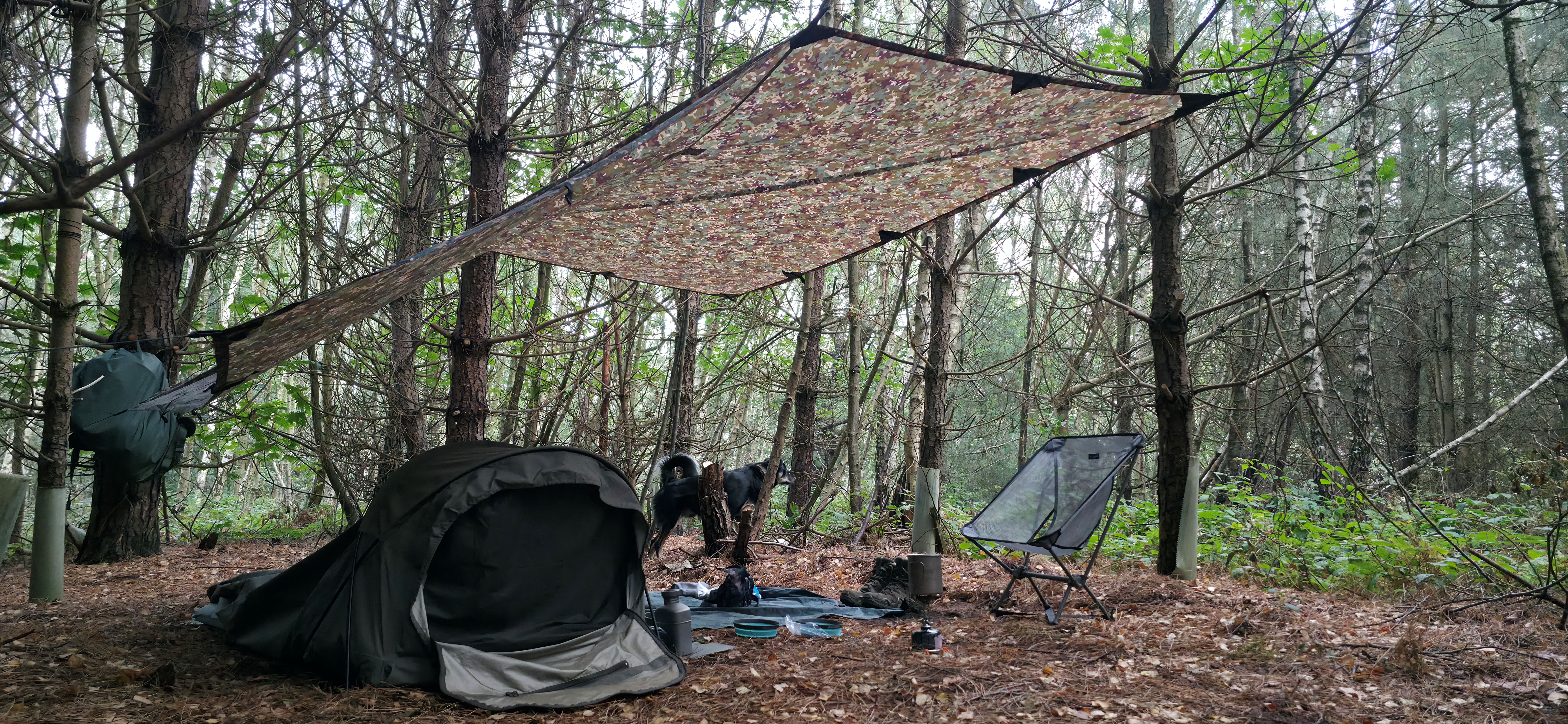
To kick off the autumn camping season, I decided to ditch the tent and use a tarp as my primary shelter instead. My tarp of choice for this outing was the 4x3 metre AquaQuest Defender. It's an extremely well-built, heavy-duty tarp—though at just under 2 kg, it is definitely on the heavier side for this time of year and mild weather conditions.
In previous posts, I’ve mentioned my plans to test my gear in stormier conditions using my Snugpak Scorpion 3 tent. However, over the past few weeks, I’ve been thinking more about efficiency and how I actually want to experience a storm outdoors. While a tent offers maximum protection, once you're zipped inside, you can’t really see what’s going on—you can only hear the wind and rain. Under a tarp, you remain right in the middle of the elements while still enjoying a clear view out into the woods.
Trying a New Tarp Setup
There's also the efficiency factor to consider. I can pitch the Snugpak Scorpion 3 in about 10 minutes, but taking it down and packing it away takes at least 15-20 minutes because getting the poles out of the sleeves is a bit fiddly, and it requires careful folding to fit back into its bag. A tarp, on the other hand, is significantly faster to deploy and pack away. From the moment I arrived at my campsite, it took less than 5 minutes to get the tarp up and take cover from the incoming rain.
That said, I did spend an extra 35 minutes on this trip experimenting with the best layout. My previous experience with tarps was mostly limited to basic A-frames and two-point wind sheds using a ridgeline and four guy lines (you can see examples of my A-frame setup in my Early June Camp post and a wind shed in my Oak Wood Camp post).
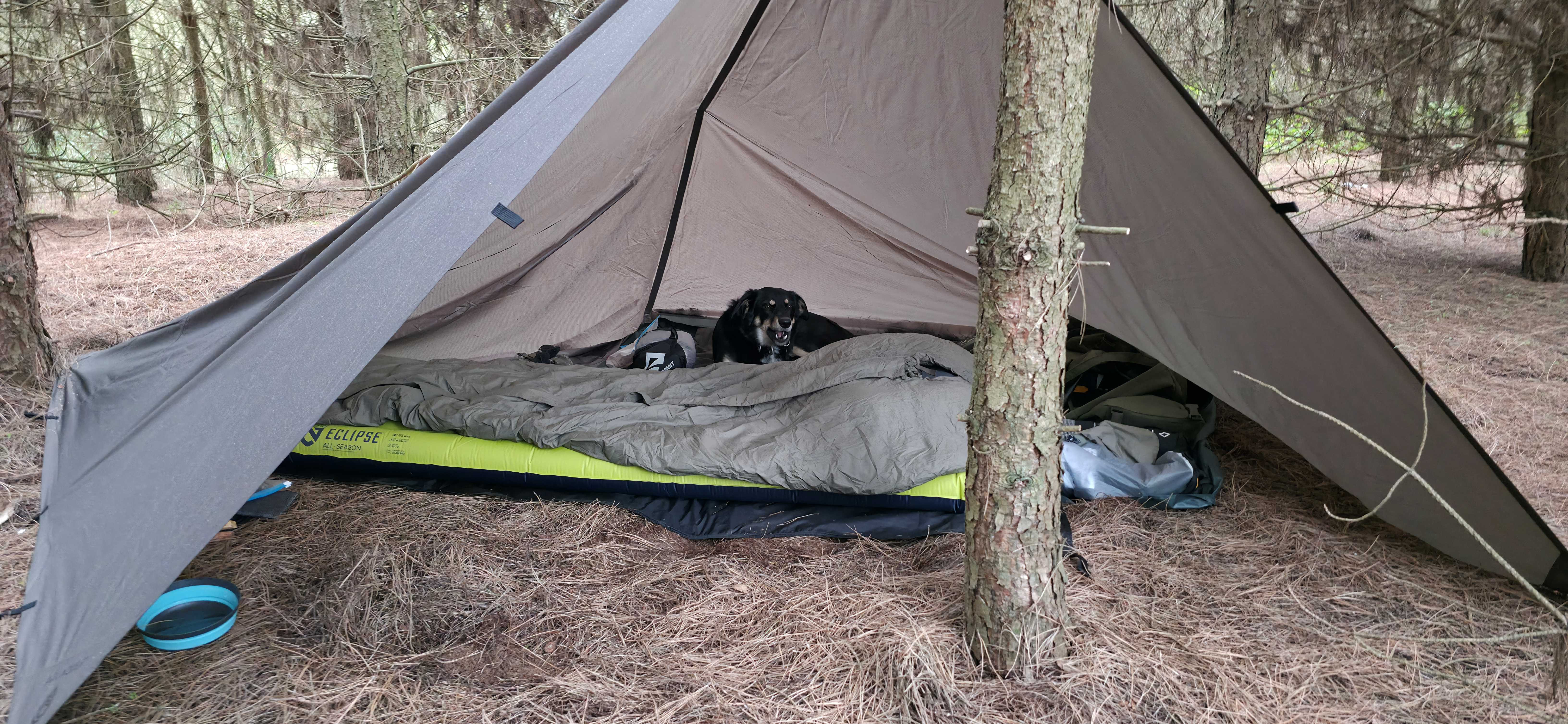
This time, my plan was to configure the tarp into a plough point. A standard plough point uses a single high anchor point with the remaining three corners pegged directly to the ground. Typically, this setup uses a square 3x3 metre tarp. Since the AquaQuest Defender is a 4x3 metre rectangle, I had to fold the excess material under itself. This extra material worked out brilliantly, acting as a built-in ground sheet and blocking 100% of the draft once oriented correctly into the wind.
Outrunning the Weather
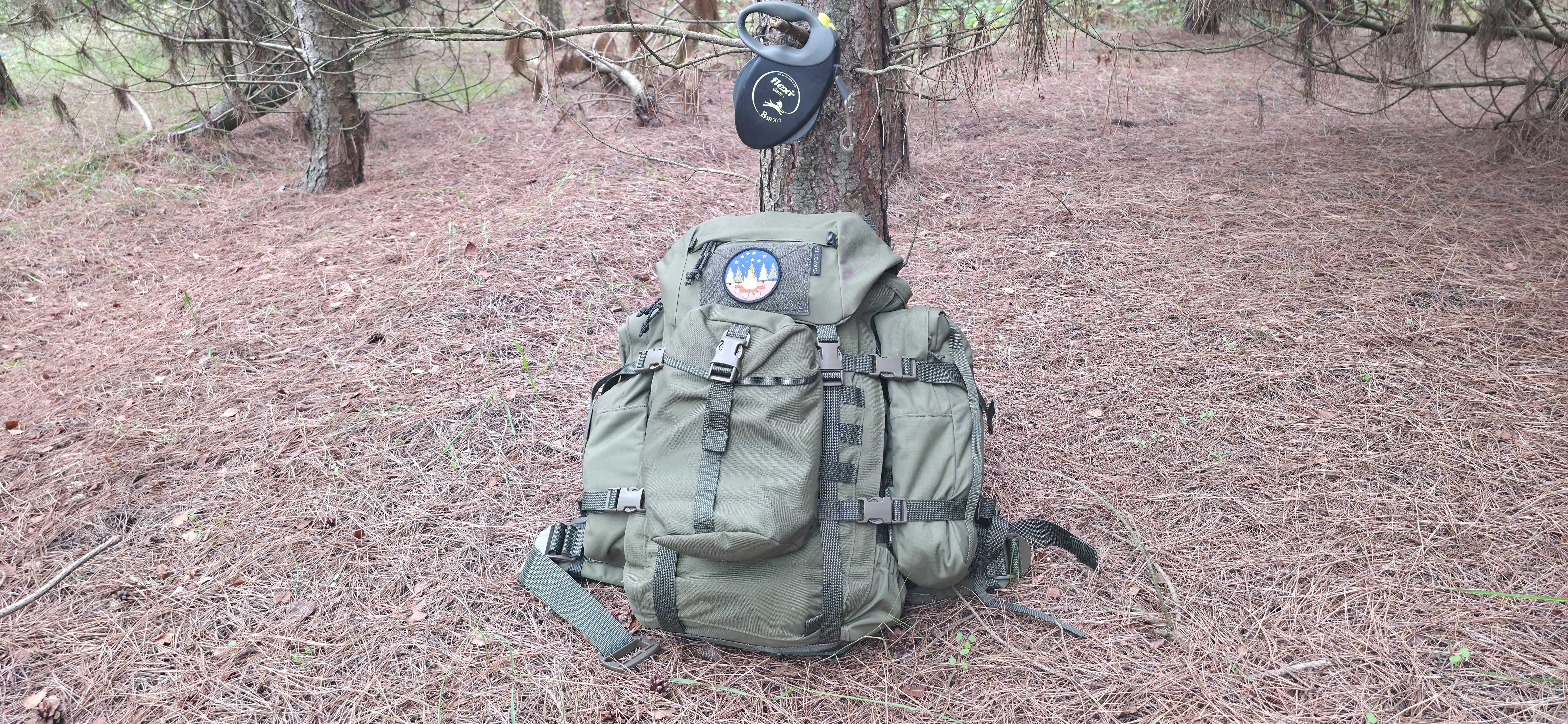
I quickly stashed my Savotta Kantamus 40L pack underneath to protect it from the rain, which had just started to fall. The rain cloud had been chasing me for roughly half the hike to the campsite. I use an app called Rain Alarm on my phone, set to alert me whenever precipitation is detected within a 15-mile radius. During the trek, I received an alert showing rain 11.8 miles away, followed by steady updates showing it closing in on my location.
The Savotta Kantamus 40L remains one of my absolute favourite packs. It's incredibly comfortable, and I appreciate its low-profile look—it doesn't scream "I'm going camping." I prefer to pack everything internally rather than strapping items like sleeping pads to the exterior, which fits my general approach to wild camping.
For me, camping is about heading deep into the woods, finding a quiet spot well away from people, and quietly immersing myself in nature. I could never see myself using a commercial campsite; I simply wouldn't be able to relax. When you're sleeping, you're in a vulnerable position, and on a publicly listed site, you never know who might wander up.
Firing Up the Bushbox XL
While my last camp was near Newstead Abbey, I had originally planned to head out to this newly scouted spot near Calverton. I held off on that location due to thunderstorm risks, but the weather for this trip turned out perfect: steady rain, gusty winds, and a crisp, chilly evening.
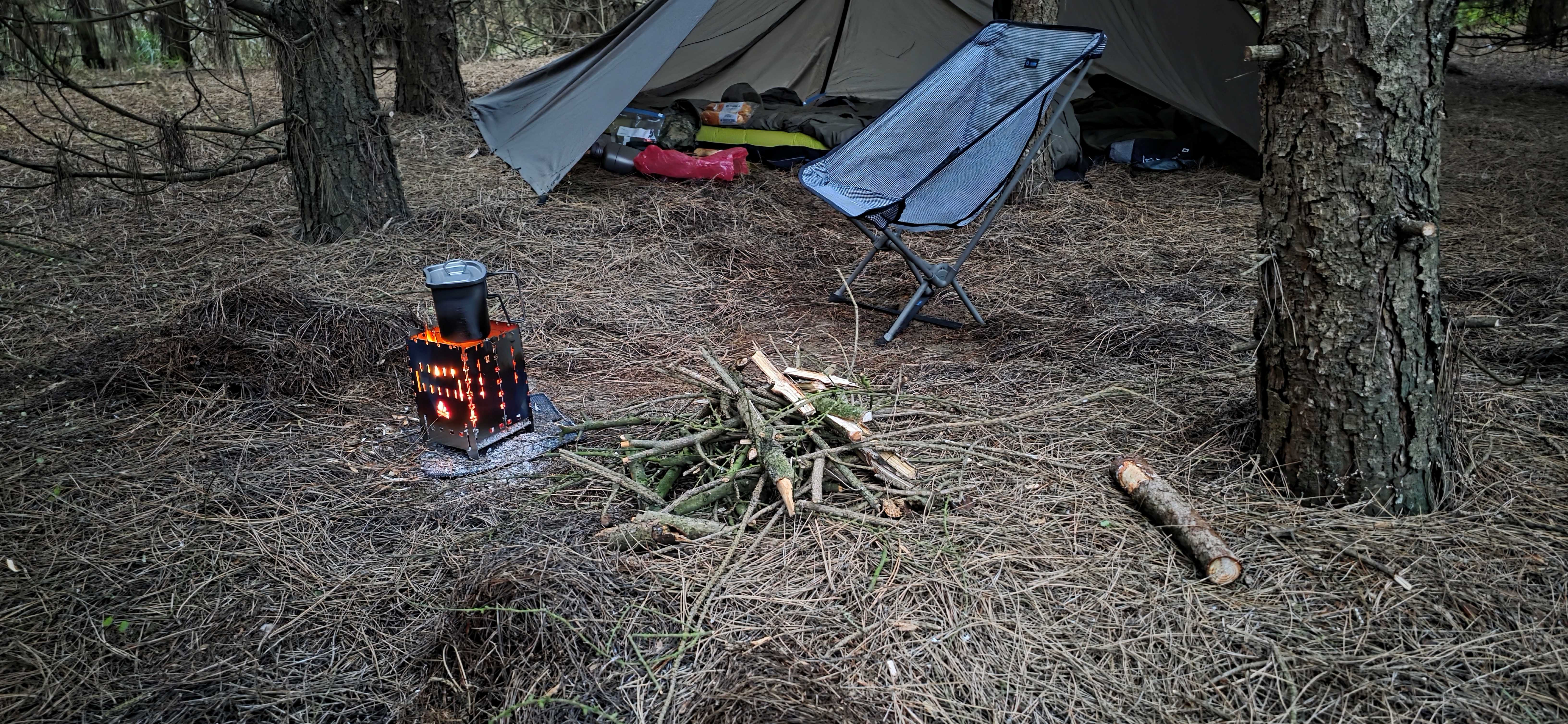
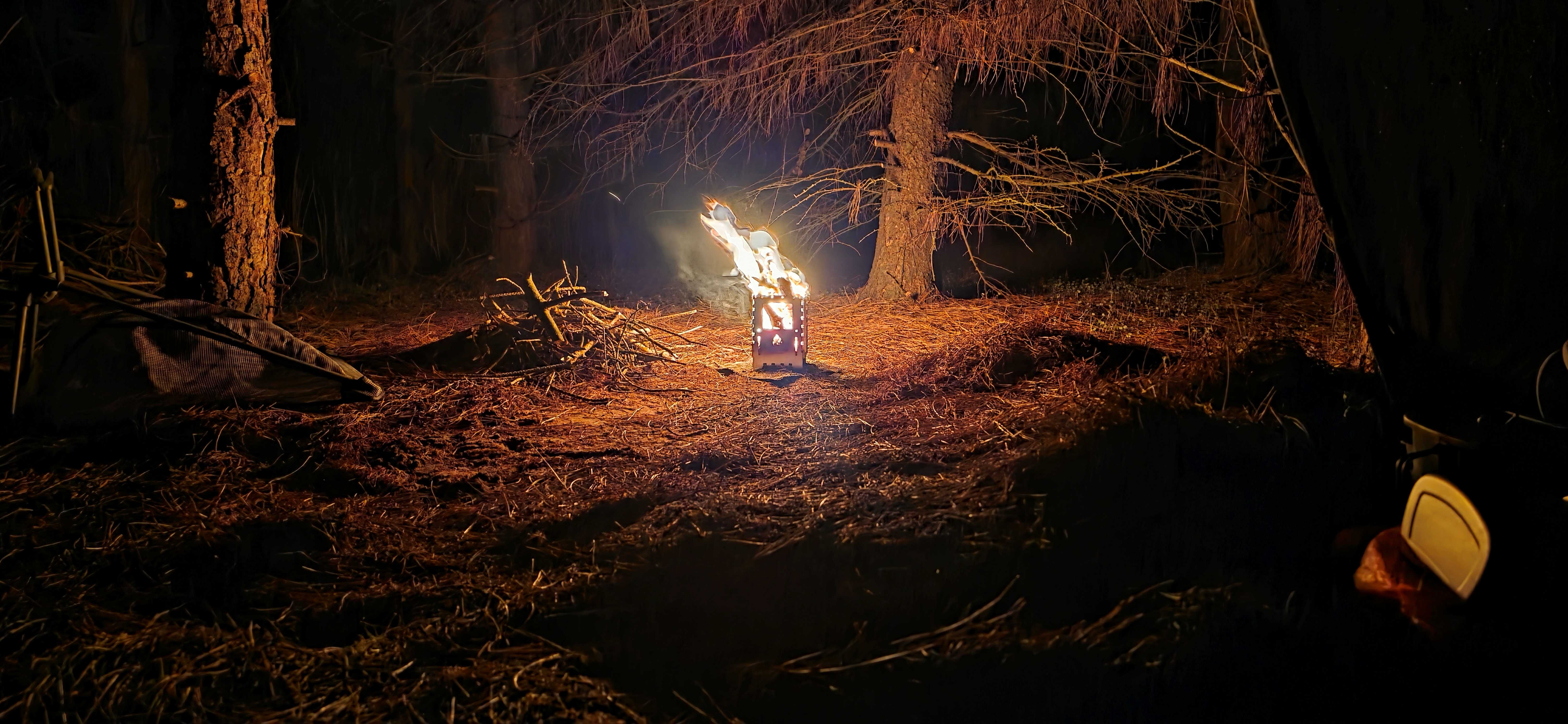
This weather gave me an excellent opportunity to break out my Bushbox XL Titanium twig stove. I hadn't been able to use it all summer due to the elevated fire risk caused by dry conditions. With all the recent rainfall, the ground was thoroughly soaked, making it safe to operate. The pine woodland where I camped had a dense carpet of wet needles on the forest floor. To be completely safe, I cleared a patch of ground down to bare dirt and placed a Draper Tools soldering mat underneath the Bushbox to prevent any heat transfer or scorching.
My next task was collecting firewood. There was no shortage of deadfall, and because pine trees shed lower branches as they grow, the lower canopy was full of dry, dead wood. I specifically searched for standing deadwood rich in resin (fatwood)—the tree's natural defence mechanism against damage and pests. Resin-rich wood has a distinct orange-red hue and smells strongly of a woodworking shop. It's exceptionally flammable and makes for an ideal fire starter.
Evening Brews & Fireside Cooking
After gathering a solid stack of wood, I processed it down. I limbed the branches with my axe, cut the main limbs into 15 cm logs with my folding saw, and batoned them down into smaller kindling with my knife. I scraped small chips of the resin-dense pine into a pile, set my firesteel right against it, and scraped it with the spine of my knife. The resin caught fire within a couple of strikes, allowing me to feed in small twigs and transfer the flame into the Bushbox.
As a backup—in case I couldn't find resin or the wood was too wet—I also carried cotton wool balls saturated with Vaseline. They light instantly and burn for 3 to 5 minutes, making them a bulletproof emergency tinder.
I paired the Bushbox XL with my Pathfinder Titanium Canteen Cooking Kit. Up until now, I had only used this cookset over clean-burning gas stoves. Burning softwood like pine leaves a heavy layer of black soot over the titanium, but I remind myself that gear is meant to be used, not sat on a shelf looking pretty.
Once the fire was established, it was time for a quick cup of tea. Darkness falls fast deep in the woods, especially with the autumn equinox less than a week away. As the water boiled, all I could hear was the peaceful sound of wind rustling through the pine canopy. Because I had set up camp well off the beaten track, I took a quick walk around the perimeter to check light spill from the fire. The tree cover absorbed the glow almost completely.
Camp Comforts & A Night Under the Tarp
After finishing my tea, I set up the bedding. As soon as I rolled out Toby's bed, he immediately claimed it. Once he settles on his pad, it takes hours to budge him, so I had to make sure his spot under the tarp was properly positioned before letting him lie down!
Glancing back at my wood pile, I realised I was running low on processed kindling for the rest of the night. I headed back out to gather another batch. I actually really enjoy this part of camp life—doing simple, meaningful tasks like processing wood for heat, cooking, and brewing tea. It's a satisfying contrast to the abstract tasks of modern daily life.
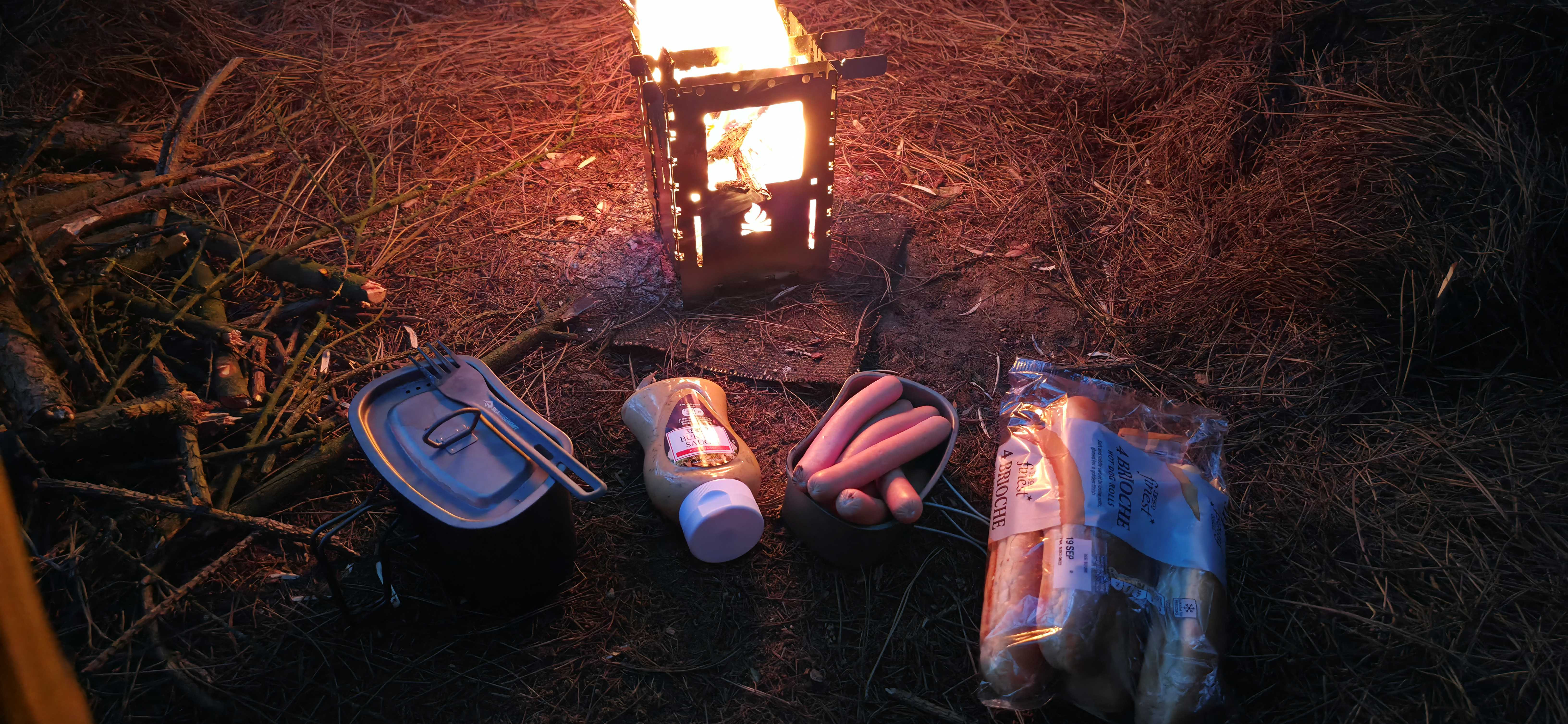
With a fresh supply of firewood ready for the evening and next morning, it was time for dinner: hot dogs over the stove. I had four cobs with me and originally planned on putting two sausages in each and giving Toby two plain ones. In the end, I ate six hot dogs and Toby managed to charm his way into four. He has completely perfected his puppy-eyes routine, despite having already finished a full bowl of dry food earlier!
With dinner finished, I sat by the fire watching the flickering flames cast dancing shadows across the pine trees. The temperature dropped quickly, and I could see my breath in the crisp night air, making the warmth of the fire feel even better.
A Deep Sleep & Morning Coffee
For sleep gear, I brought my Carinthia Defence 1 sleeping bag. If this were a storm or winter camp, I would have paired it with a bivy bag to protect against blowing spray. A bivy adds roughly 10°C to a sleep system's thermal rating, which would have made me far too hot on this night. While I own a British Army bivy bag, it's fairly heavy and lacks a mesh closure to keep out insects, so I'm looking into picking up a Carinthia bivy in the future for a lighter, fully enclosed setup.
I had one last cup of tea before climbing into my sleeping bag around 23:30, listening to the steady patter of rain against the tarp. Although I stirred a few times, I slept soundly until 08:00—one of the best nights of sleep I've ever had outdoors.
Checking the weather radar in the morning, I saw that a heavy rain belt had swept directly over us around 3:00 AM, and I had slept right through it. The morning brought heavy overcast skies and a fine, atmospheric mist.
Once dressed, I restarted the fire using a Vaseline-soaked cotton ball, which caught on the very first stroke of the firesteel. I boiled water for a morning coffee—I've recently switched to single-use coffee bags, which are much easier to pack than instant coffee and taste far fresher. I paired it with an Adventure Food Expedition Breakfast, which only requires 150 ml of hot water.
Packing Up & Leave No Trace
With breakfast finished, I began packing away my gear into dry bags before loading the pack. Dousing the fire pit with my remaining 200 ml of water, I verified that the embers were completely cool to the touch before concealing the area with damp pine needles to leave no trace behind.
After a thorough final sweep of the site to ensure no kit was left behind, we began the peaceful walk back at 10:00 AM. I'm already looking forward to returning to this location soon to refine my tarp deployment speed for future trips.
Below is a full breakdown of the gear loadout and pack weights carried on this trip.
Click to show gear used on this trip
(Comfort Rating: 15 – 20 kg)
Trip Report: Stormy Camp At Oak Wood
For those of you who follow the meteorological calendar, you’ll know that September 1st marks the beginning of autumn in the Northern Hemisphere. Wanting to squeeze in one final summer trip, I decided to head out into the woods for a quick overnight camp.
For the past three months, we’ve been experiencing extremely dry conditions across the UK. In fact, it was the start of June when we last saw any substantial rain—a fact I remember clearly because I was on a camping trip at the time. Over the last week, however, the weather has done a complete turnabout. We’ve received nearly 11 cm of rainfall in less than two days, leading to localized flooding. Alongside the heavy rain, intense thunderstorms rolled through, with my home weather station recording an astonishing 431 lightning strikes in just 48 hours.
Last weekend, I went for a long hike to scout out a potential new campsite. I found a great spot and originally planned to stay there. However, because the area sits in woodland right at the top of a high hill, camping there with lightning in the forecast didn't seem like the smartest move. Instead, I opted for a reliable location near Newstead Abbey that I’ve visited a few times before.
The History of Oak Wood
The woodland I have picked to camp in is named Oak Wood on historical Ordnance Survey maps. When planning my routes, I like to compare current paths with maps created over a century ago. It provides a fascinating perspective on how the landscape has evolved and gives real insight into local history. While the name suggests the area was once an oak forest, only a single ancient oak tree remains today at its very centre. I’m no arborist, but to the untrained eye, this solitary tree looks centuries old. The rest of the woodland has since been replaced almost entirely by pine trees.
Beating the Weather Window
The walk out to the campsite was atmospheric and gloomy, with heavy dark clouds overhead and a cool breeze cutting through the trees. Although I managed to dodge the falling rain on the trail, water from earlier downpours was continuously dripping down from the forest canopy, leaving me a bit damp. Just as I was approaching my pitch, a weather alert popped up on my phone warning that heavy rain was imminent.
With sunset less than an hour away and a downpour looming, my immediate priority was to reach the spot and pitch my tarp quickly so Toby, my gear, and I could stay dry. I keep my tarp stored in an exterior pouch on my pack for rapid deployment. As soon as I arrived, I hung my pack on a nearby tree and pulled out the tarp.
On previous trips, I used standard 550 Paracord for my tarp guy lines, but I kept running into the same issue: paracord absorbs a significant amount of water. When wet, the cordage stretches, causing the tarp to sag and forcing you to step out into the rain overnight to retension lines. When bad weather hits, I prefer to hunker down inside. Paracord is also comparatively heavy, bulky, and takes an age to dry out.
To solve this, I recently switched to DD Hammocks SuperLight Guy Rope. At just 2mm thick, it stretches significantly less when wet and absorbs virtually no water, meaning most of the rain simply beads up and runs off. The main drawback is that it can be tricky to manage and store. I haven't quite mastered a tangle-free storage method yet, so when I'm trying to pitch a tarp in a hurry, any delay usually involves me frantically picking apart knots!
With heavy rain starting to fall, I worked as fast as I could to get a basic shelter overhead. I got the ridgeline set up without fuss and pegged out two of the corner guy lines, but the remaining two lines were thoroughly tangled. It took a few frustrating minutes to get them sorted, but fortunately, the worst of the rain held off just long enough for me to get the tarp fully secured.
Shelter Setup and Ground Protection
With the tarp securing us from above, I set to work building my main shelter while the rain pattered overhead. My setup for this trip was the Carinthia Observer Plus bivy tent, along with a German Army "Elephant Skin" groundsheet for floor protection. To maximize interior space, I placed my Therm-a-Rest NeoAir XTherm NXT MAX Regular Wide sleeping pad underneath the bivy floor rather than inside. I brought along my Carinthia Defence 1 sleeping bag, and I used a DD Hammocks Magic Carpet mat under the tarp shelter to keep my pack out of the mud.
If I were using this pad-under-bivy layout at an unfamiliar site, I’d definitely add an extra protective layer beneath the sleeping mat—such as a Mil-Tec BW EVA foam pad. The German Army Elephant Skin is tough, but it's relatively thin, and sharp debris could potentially puncture an inflatable pad through it. While I’ve already cleared major hazards at this particular spot on previous visits, arriving at a new location in the dark makes it easy to miss sharp roots or thorns. Waking up on a flat mat in freezing temperatures is never an enjoyable experience—something I unfortunately learned the hard way earlier this year!
Camp Cooking & Dinner with Toby
Once the camp was fully established, it was time to turn my attention to food and hot drinks. I was testing out some new kit on this outing: the Pathfinder Titanium Canteen Cooking Kit paired with a SOTO WindMaster stove. Before sorting out my own dinner, I made sure Toby was settled. I filled up his food bowl, topped off his water however, As soon as his bed hits the ground, he immediately hops on and sits there contentedly, watching me through the mesh door flap.
Our camp routine is pretty consistent: he sits quietly on his bed watching me prep food, and only starts eating his own dinner once I sit down to eat mine. I put some water on to boil for a hot cup of tea, and I was thoroughly impressed with the SOTO WindMaster—it brought the canteen cup to a rolling boil in about 90 seconds. While the tea was brewing, I started on dinner. Instead of my usual dehydrated meal, I decided to cook something a bit more hearty: tinned kidney beans, tinned beef curry, and a pouch of precooked rice.
I chose this meal specifically because it allowed me to make full use of the new cookset. Most of my other stoves and pots are designed purely for boiling water, whereas the Pathfinder kit features a canteen, a nesting cup, and a shallow nesting bowl. I used the bowl to heat up the kidney beans, used the nesting cup to warm the rice and beef curry, and then combined everything together into the main cup.
Listening to the Rain
After eating and cleaning up, I leaned back in my camp chair to listen to the gentle patter of rain against the canopy and tarp. For the first time in months, there was a noticeable chill in the night air—a clear sign that autumn is right around the corner. With sea temperatures higher than normal this year they say that the impact of El Niño will be far greater, weather forecasts are predicting an active storm season for the UK this autumn and winter. I plan to be out camping in as many of those stormy nights as I can manage.
Eventually I did start to get really cold so I crawled into the bivy and settled into my sleeping bag. It took a little while to drift off but once I did, I slept soundly right through until morning.
Morning Sun and Packing Down
The night turned out to be peaceful and uneventful. I woke up around 06:30 and brewed a fresh cup of tea. The morning sun was just beginning to cut through the damp trees, making the woodland glade appear almost luminous. A quick check of the weather forecast revealed that the sunshine wouldn't last; another wall of rain was scheduled to arrive around 10:30, so I began breaking down camp.
Lately, I’ve been letting Toby wander off-lead much more around camp. I used to worry when he wasn't tethered, but I've become far more relaxed as his recall and obedience have improved. He still has his funny little quirks—for instance, if I tell him to "wait" at a blind corner on a trail, he will annoyingly take two or three extra steps around the bend just out of sight. But when I finally catch-up, he’s always sitting right there patiently waiting for me.
Like most dogs, he loves to investigate every scent. When he's on the lead and stops for a sniff, I think he assumes I want to examine the spot too, which can make trail progress painstakingly slow in heavily frequented areas by other dogs. Off-lead, I can keep moving at a steady pace while he investigates. Once he's finished, he trots up behind me—sounding remarkably like a small galloping horse as he catches up!
While I was packing away gear, Toby trotted around the site contentedly inspecting every tree and bush. On previous trips, I kept him on a long line, but he would get restless during the lengthy process of breaking camp. Letting him explore kept him happily occupied, and by 08:30, we were packed up and hitting the trail home.
History of Burntstump and the Road Home
In my previous post, I promised to look into the origin of the name "Burntstump Hill." The history behind it is fascinatingly simple: historical records show that early woodsmen and foresters used to ignite large tree stumps on the high ridge to serve as signal beacons across the landscape. It must have been an incredible sight, dark, endless woodland stretching as far as the eye could see, illuminated only by the glowing embers of burning stumps crowning the hilltops.
Toby and I managed to beat the incoming rain back home but only by around 15 minutes, and it has been pouring ever since. Looking on the bright side, this rain is desperately needed to replenish the local lakes and waterways I’ve walked past over recent weeks. On a personal note, the damp ground means that for my next trip, I can finally fire up my Bushbox XL Titanium wood stove without worrying about wildfire risks!
Our next outing will likely be at the newly discovered campsite, so we'll have to see how the weather unfolds. The location should be suitable even during a named storm because the trees are relatively short, significantly reducing the risk of one falling on us in high winds.
I can never be accused of being a fair-weather camper; my first camping trip was a multi-day adventure in late autumn where I experienced freezing conditions, rain, wind, and dense fog. I plan to write about that trip one day, as it fundamentally shifted my perspective and taught me a great deal.
Click to show gear used on this trip
(Comfort Rating: 15 – 25 kg)
Trip Report: Comfort Camp At Robin Hood Hill
On my last trip, my main goal was to stay as lightweight as possible. I managed to fit everything I needed for an overnight camp into what was essentially a daypack.
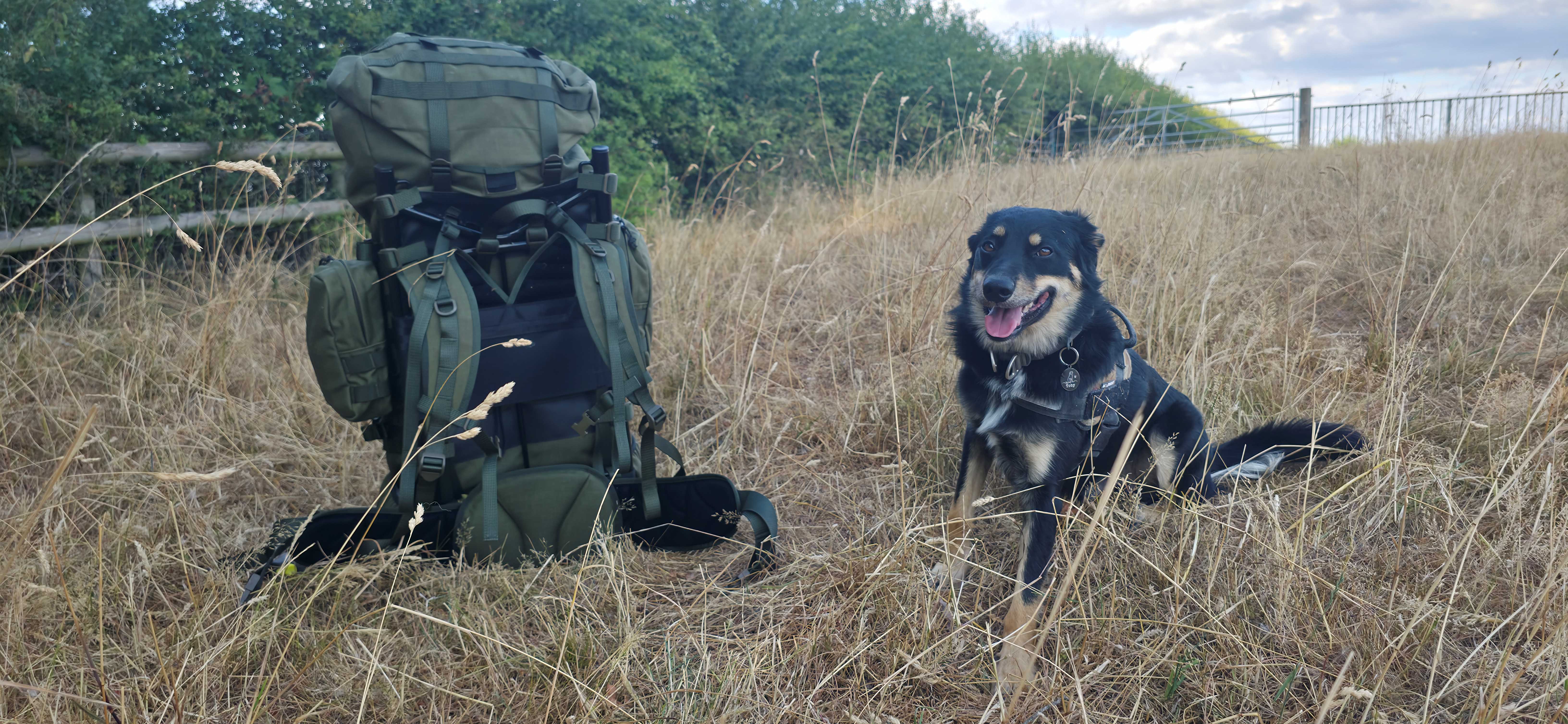
This time around, I went to the opposite end of the spectrum and opted to go big. Out came the Savotta Jääkäri XL—a massive pack that I filled to the brim with everything needed to make an overnight trip as comfortable as possible. My total pack weight came in at 52 lb (23.5 kg). While that's a bit of a pain to heave onto your back, it falls well within the limits of the Jääkäri XL, which does an excellent job of distributing the load once it's on.
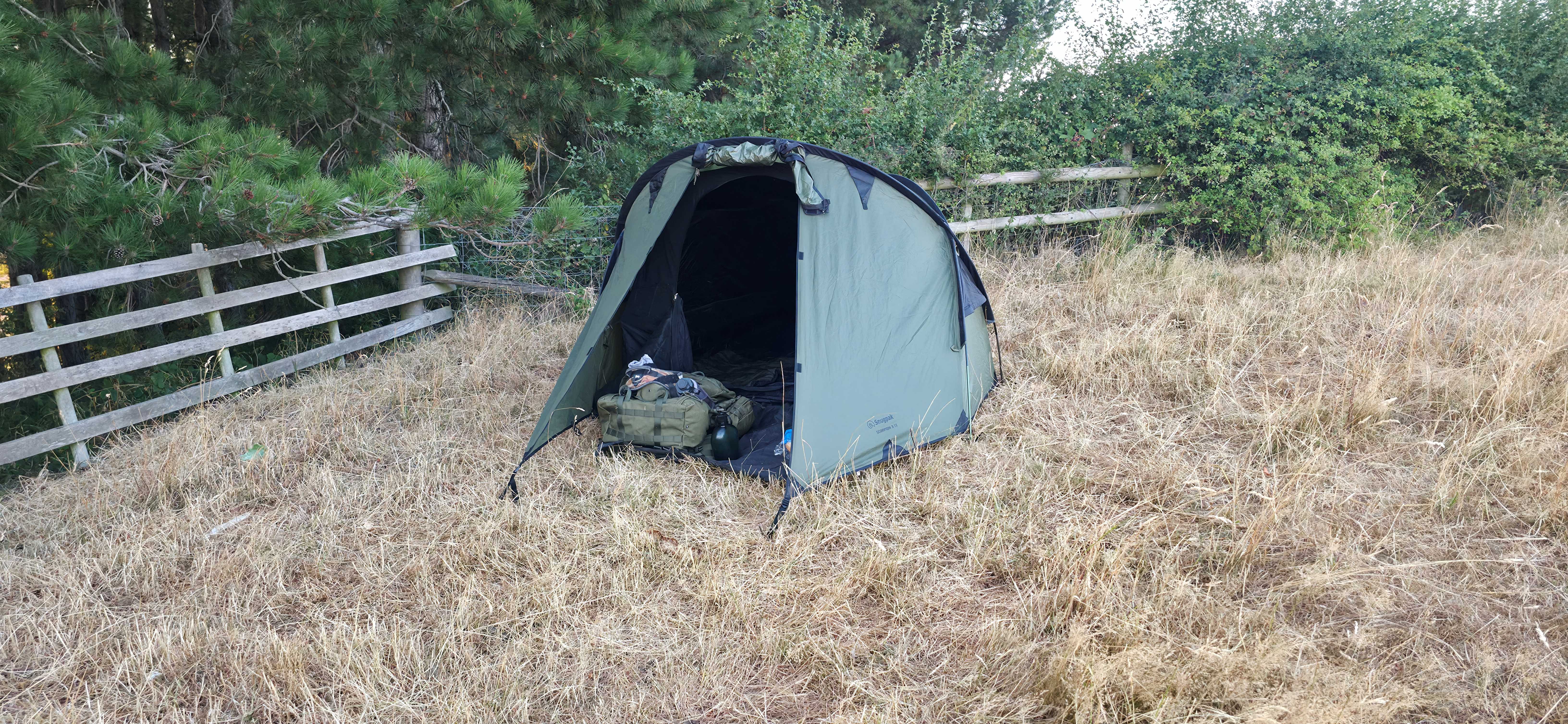
For shelter, I packed the Snugpak Scorpion 3. It’s a fairly large tent, weighing around 3.4 kg, but it offers a huge amount of interior space—a luxury I haven't enjoyed since the end of winter. I had an ulterior motive for bringing it, too: I needed to check it over and get some guy-lines fitted.
Later this year, I plan to do some storm camping. While I’ve camped in stormy conditions before, I’ve always set up in somewhat sheltered positions. This year, I want to pitch the tent in exposed locations, so I had to be certain the shelter was fit for purpose and the guy-lines were entirely sorted. I'm not looking for thunderstorms, but rather named storms—the kind that bring high winds and driving rain, or even snow, though snow in England feels fairly rare these days given our increasingly temperate climate.
Brambles, Droughts, and Disused Railways
I left home around 15:30 to begin the 8.5-mile hike to my chosen campsite. My route deliberately kept me off any major roads, so I made my way down a disused railway line that hasn't seen a train since 1999.
We had a very wet winter this year, followed by a sunny spring and summer, which sparked an absolute explosion of plant growth. On some of my recent travels, I’ve seen ferns stretching as far as the eye can see, all growing taller than me. While ferns are pleasant, brambles are not. The old railway line was absolutely choked with them, making the trek somewhat of a challenge.
Eventually, I decided to step off the railway and take a slight detour, navigating through Samson Wood and into the Watchwood Plantation. One thing that struck me during this stretch was the sheer amount of dead vegetation. Despite the early-season explosion of growth, we haven't had a drop of rain since the start of June, leaving most of England in a drought.
Consequently, a lot of the vegetation has died off. The ferns that were a vibrant, healthy green just weeks ago are now brittle and brown. It’s not just the ground cover, either; many trees look like they belong in late autumn. With every gust of wind, I watched dead leaves go flying through the air.
Securing the Summit
Nearing the edge of the Watchwood Plantation, I caught my first glimpse of my destination. It’s easy to spot, not only because it’s the largest hill around Oxton, but also thanks to a highly distinctive mobile phone tower at the top.
After passing through Oxton—a very picturesque little village—the only thing standing in my way was a 160-metre elevation gain over three-quarters of a mile. Upon reaching the top of any potential campsite, my first ritual is to drop my pack and observe my surroundings for 10 to 15 minutes (weather permitting).
This gives me a chance to see what's going on and check lines of sight, allowing me to position my shelter in the most concealed spot possible. Much of the hill has been turned into grazing land for sheep, which heavily restricted my options.
Historically, I've only ever visited this location in winter. Every time I’ve been, it’s rained, turning the paths into total mudbaths. Those brutal weather and trail conditions usually act as a great natural deterrent to keep people away. I always embrace that kind of misery because it adds to my camp security. I distinctly remember bracing myself to crawl out of the tent on a freezing, rainy morning here last winter, thinking to myself, It would be great to come back here in the summer.
Well, here I was. The only issue with camping here in the summer is that the pathways are actually pleasant to walk on. As I took a knee to observe the area, the first thing I noticed was the heavy foot traffic from dog walkers. Fortunately, none of them decided to scale the final, steepest section of the hill, so I found a spot tucked neatly away into a corner to pitch the tent.
Setting up the Snugpak Scorpion 3 was straightforward, taking less than five minutes. I did run into one issue: the pegs. There was a bit of a breeze—nothing strong enough to truly warrant anchoring the whole tent, but you need at least two pegs to hold the doorway out. The problem was that the summer ground had baked into concrete. I actually ended up bending a peg trying to force it in. Luckily, I managed to push them just deep enough to secure the front porch.
A Culinary Catastrophe
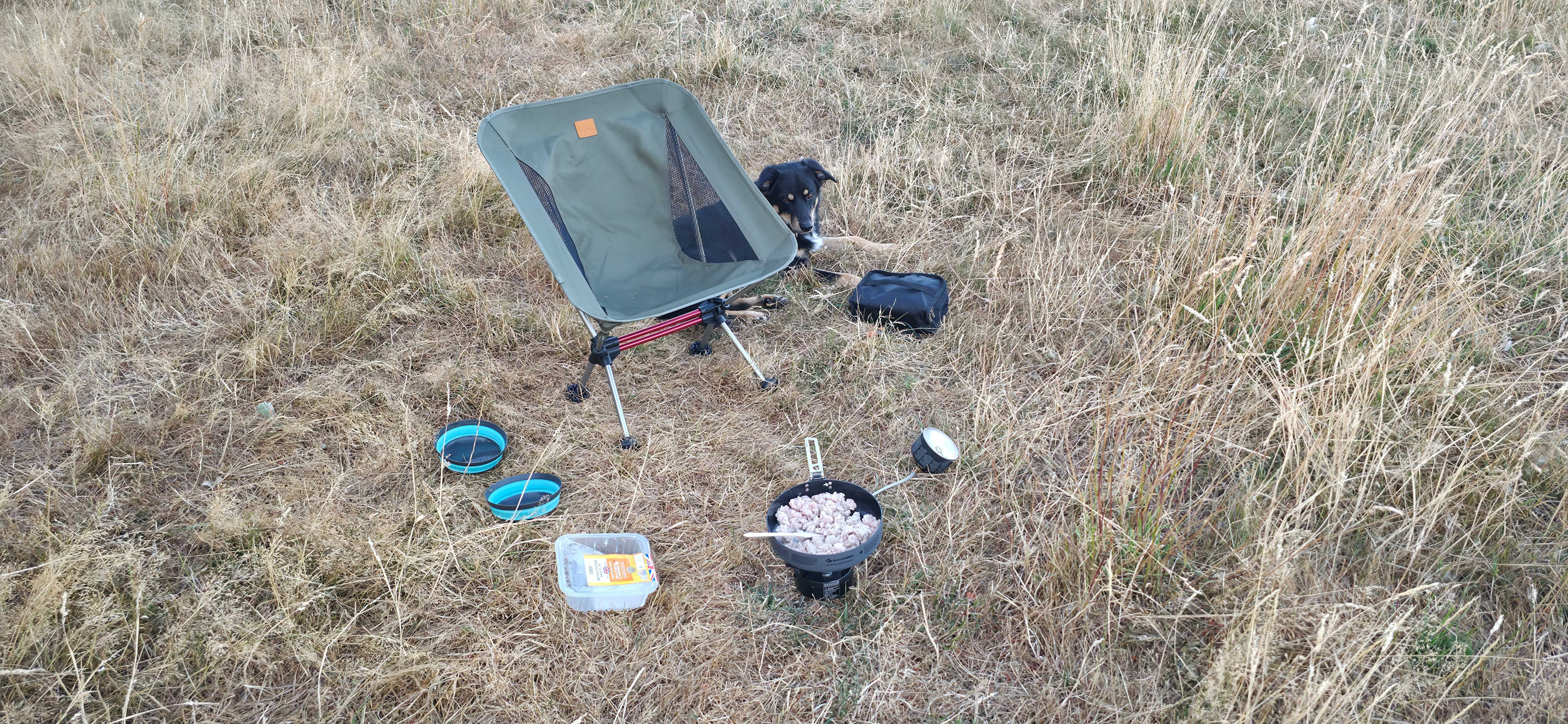
Next, it was time for food. Because this was a comfort camp, I had hauled up 3.5 litres of water to guarantee plenty of tea, alongside a pack of burgers. I didn't want Toby to miss out, so I had brought some minced chicken just for him. I always sort his food out first; otherwise, he sits there staring at me with those puppy-dog eyes, making me feel incredibly guilty.
I cooked his chicken and served it up. He enthusiastically tucked in, polishing off about half of it before I could even sit back down to start my own dinner. While waiting for his food, I had prepped the onions on a chopping board using my Mora 840 Clipper Companion.
I threw my burgers into the pan, let them sizzle, flipped them, and popped over to my bag to grab the buns. When I turned back, I realized the heat from my stove had dropped massively. Assuming it was running low on fuel, I rotated the gas canister. The flow improved, but only for about 30 seconds before the flame died right back down. I kept rotating it to squeeze out the last remaining gas, unconcerned because I knew I had a spare canister in my bag.
The first can finally depleted entirely. I swapped them over, fired it up, and my burgers started sizzling beautifully again. I went back to prepping my buns, but suddenly, the roaring sound of the stove just stopped. I lifted the pan and looked down to find a pathetic, candle-like flame flickering away. Turning the new tank did absolutely nothing.
An immense wave of disappointment washed over me as it dawned on me that the burgers I’d been looking forward to all week were now a lost cause. Then the second realization hit: without a working stove, my 3.5 litres of water were useless. The cups of tea were off the table, too.
Figuring I needed to eat something, I miserably ate the plain burger buns topped with a squirt of ketchup and slices of fake cheese. I barely managed two of these before giving up. It was far from an enjoyable meal, so I resorted to my emergency breakfast bar to fill the gap.
Again this week, I have learned an important lesson. Although not as critical as my previous lesson, I now know that I need to weigh the gas canisters I bring to ensure there is actually enough fuel in them.
A Flawless Night and a Swift Departure
With dinner entirely written off, I cleared everything away, sat back, and watched the sunset—which, moving into August, happens noticeably fast. As soon as the sun dipped out of sight, the temperature dropped sharply. I threw my jacket on and sat looking out into the distance, trying to identify the different areas sprawling out below me.
By 22:00, it was time to hunker down. I was actually looking forward to this, as it was my first chance to test out my new Nemo Eclipse Sleeping Mat. Previously, I’d been using the Therm-a-Rest NeoAir XLite. While it’s brilliantly lightweight, as a side sleeper, I often found my elbow touching the hard ground because it’s fairly thin. The Nemo mat is substantially thicker.
I had checked the weather reports beforehand and noticed the nighttime temperatures were going to be much cooler than the previous week, so I had strategically swapped out my Carinthia Tropen sleeping bag for the warmer Carinthia Defence 1. Toby quickly settled into his bed, and within five minutes, he was spread out, taking up way more space than necessary, and snoring his head off. I got cozy in my bag, tested the new mat, and found it exceptionally comfortable.
I fell asleep quickly and enjoyed what might have been one of the best nights of sleep I’ve ever had in a tent. I only remember waking up once to the sound of Toby drinking his water. I was wide awake by 05:30, and since a hot breakfast and a morning brew were out of the question, I immediately started packing up.
It took me about 30 minutes to get everything stowed away in my pack. I couldn't help but smile, thinking back to my earliest camping trips where breaking camp would take me nearly two hours.
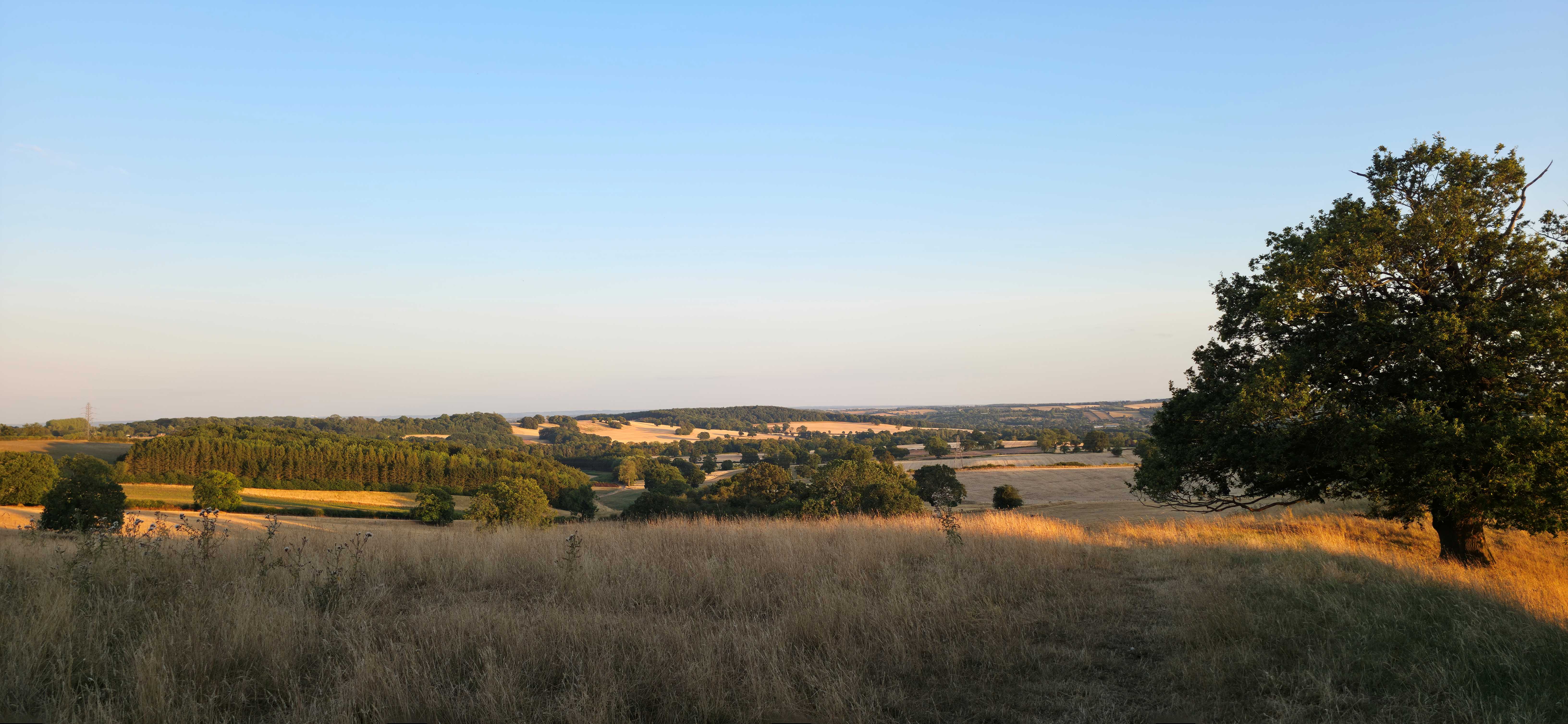
I made my way down the steep incline I had scaled the day before, pausing every so often to look up and take in the views. Since my plan is to only return to Robin Hood Hill during storm season, odds are I won't get to enjoy this scenery again anytime soon—it’ll likely be completely whited out by fog or driving rain.
The walk home was pleasant. Instead of heading back down the overgrown railway line, I skirted around the edges of a country park called Burnt Stump Hill. I'm certain there’s an interesting story behind that name, and it’s one I’ll most likely be researching on my next camping adventure.
Since I missed out on burgers this week, I think it's only fair that I plan another burger camp for next week. This one will be low-key and more of a stealth camp, so I won't be bringing all the comfort gear. Instead, I'll be using a smaller shelter, such as the Carinthia Observer Plus, as I'd like to try placing my sleeping mat under the bivvy rather than inside it to gain a lot more space. Look out for my next trip report.
Click to show gear used on this trip
(Comfort Rating: 25 – 35+ kg)
Trip Report: Late July Camp
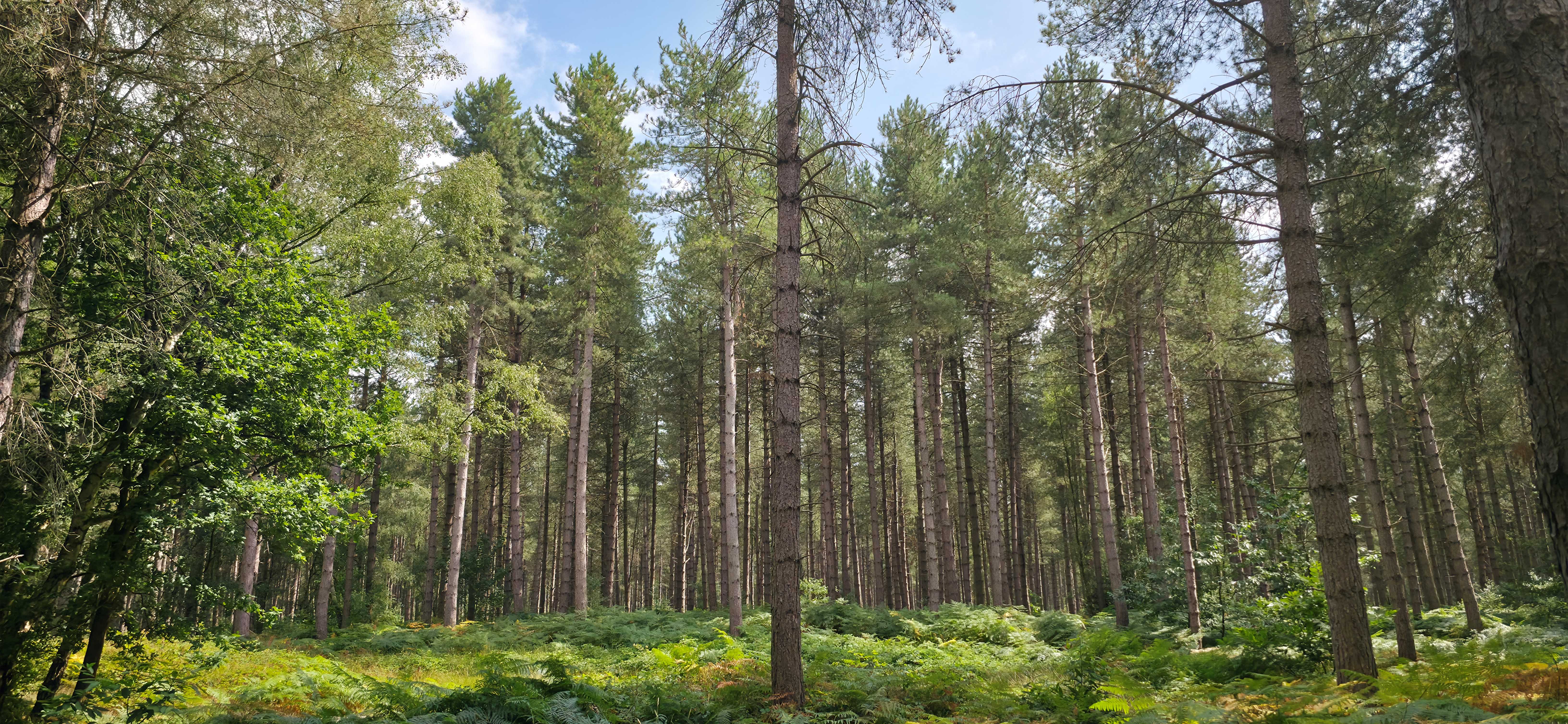
This post covers my overnight camp setup from a trip during the latter half of July, situated within Sherwood Pines Forest Park.
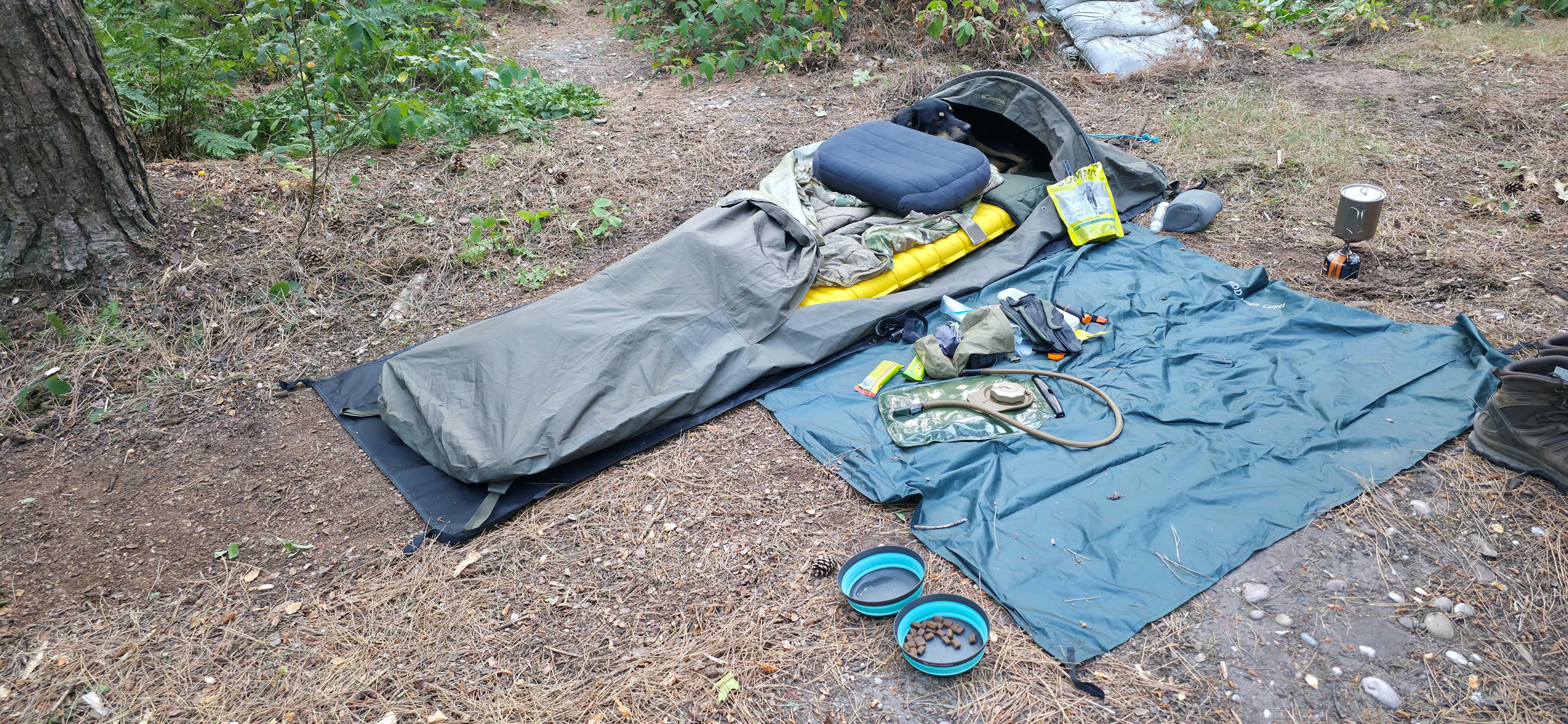
On this trip, I decided to go as lightweight as possible. With the chance of rain at pretty much 0%, I left the tarp at home and instead opted for my Carinthia XP II Plus Bivy Bag. I knew it would be a tight squeeze for me and my dog, Toby, but since summer nights are short, I figured even if it turned out to be a terrible idea, at least the weather would be nice. Worst-case scenario, I could just use it as an expensive ground sheet.
The rest of my sleep system consisted of a Carinthia Tropen sleeping bag, a Therm-a-Rest NeoAir XLite NXT MAX (Regular Wide) sleeping mat, and a Sea to Summit Aeros Premium pillow. As usual, Toby had his OneTigris dog bed.
The Pack and the Journey from Langwith
I managed to fit all my gear into a Savotta Kahakka 25L, which I expanded by utilizing two Savotta 8L side pouches. Instead of mounting the side pouches externally, I slipped them directly into the pack's massive side pockets and secured them with some bungee cord to prevent them from sliding out. My total carry weight, including water, was 29 lbs (13.15 kg)—just over the comfort rating of the pack. I also intended to add an additional 1 kg of weight during the trip, as I had planned to stop and collect water along the way.
Like my previous trip, I opted to take the train and get off at Langwith. It feels like an old mining town, and it is definitely not the easiest place to reach via rail. The trains only seem to stop at this station every two hours, and not at all on Sundays—despite the fact that you can actively see trains running through it. I could understand the schedule if this were just a tiny village with a few houses, but it is actually quite a large residential area. Either way, it serves as a great launching pad because it only takes about 20 minutes from stepping off the platform to being completely out in the woods.
The Detour and Navigational Realities
Since my last trip turned into a 22-mile hike in a single day, I wanted to scale things back this time. My planned route to the chosen camp area was a much tighter 13.5 miles. The start of the hike went smoothly. Because I had navigated these trails before, I was fairly familiar with the terrain. It was nice to spend more time actually looking around at nature rather than constantly glancing at my watch for navigational checks.
After moving around Meden Vale and past Phoenix Airsoft, I joined Route 6, which is part of the National Cycle Network. There are tons of these dedicated cycle routes spanning the country, some of which run for over 100 miles. Because I started this trip on a Wednesday, it hit me right around the time I collected my water that I had walked all this distance without seeing a single soul since leaving the train station. To some, that might seem lonely or even a bit eerie, but for a true introvert, it was absolute perfection.
I collected my water and filtered it using my GRAYL UltraPress 500ml Water Purifier. It worked flawlessly, and I quickly filled up a 1-liter Nalgene bottle that I intended to use for cooking later in the day. I also decided to pop in two purification tablets and watched them fizz as they sank to the bottom of the bottle. Little did I know, I had just screwed up big time.
I packed everything away and continued my hike along Route 6, taking in the scenery until I reached Kings Clipstone. This is where I encountered a major route-planning error. Looking at the OS maps, it seemed like you could simply follow the main B-road to enter the north side of Sherwood Pines Forest Park. However, this road turned out to have absolutely no footpaths. It was incredibly narrow, and cars were speeding along it. If I had been by myself, I might have just risked it by squeezing onto the overgrown grass verge (which I assume is what the OS map flagged as a path). But since I had Toby with me, I chose the safer option: continue southwest on Route 6 and find an alternative entry point into the forest.
This turned out to be a massive detour. I walked looking for an entrance with a large metal fence to my left protecting a railway line. I believe the line is disused now, so I’m not entirely sure why a fairly new fence was mirroring it. By the time I finally found an opening, I had walked almost entirely around to the opposite side of the forest. I was now on the western edge of the park, but I wanted to camp on the eastern side, as I knew the terrain there would be far better for a proper stealth camp.
I’ve been to Sherwood Pines dozens of times, but always on a mountain bike. Walking across it on foot gave me a completely different perspective on scale. My only mental reference points for time were previous cycling trips as I hiked past the familiar entry points of various bike trails along Kitchener's Trail. It turns out that walking across Sherwood Pines takes about an hour. I eventually made my way past the Center Parcs site. Walking past that place is bizarre; with the massive metal fencing running around the entire perimeter, it looks almost like a prison. I kept moving past it, aiming for a section of the forest near the Adrenalin Jungle Activity Centre.
Hard Ground and Chew-Toy Tent Pegs
I managed to find a solid entry point, and the search for a suitable stealth site was on. I had a specific picture in my mind of what I wanted: nestled right on the edge of the forest, tucked away safely behind a thick patch of ferns. I found a great spot initially, but being relatively close to Center Parcs, the distant sound of screaming children carried through the trees, so I pushed on.
I didn't have to move far before the dense forest completely absorbed the noise. I found a nice little clearing—not the absolute perfect campsite, but good enough. I was feeling the exhaustion by this point. Thanks to the massive detour, my relaxed 13.5-mile hike had ballooned into a 19-mile slog, and I was ready to drop my pack.
To save weight, I hadn't brought any tent pegs, planning instead to whittle some out of sticks found around the site. The major flaw in this plan was the sheer dryness of the ground. At the time of this camp, the area was closing in on nearly 40 days without any significant rainfall. In fact, the last time it had rained properly was during my previous trip at the start of June. The ground was like solid concrete. No matter how sharply I carved the pegs, they simply would not penetrate the earth, even when I tried to pre-dig the ground a little.
Toby wasn't helping either. He decided my freshly crafted pegs made excellent chew toys and systematically destroyed four of them before I could even attempt to drive them into the dirt. I eventually gave up on the peg situation entirely. Luckily, the bivy layout doesn't strictly require pegs to stay upright; I was just trying to stretch the fabric out to maximize my internal headroom.
The Chlorine Incident
With camp established, it was time to feed and water my little peg-destroyer. I watched Toby gobble down a massive bowl of dry kibble while I grabbed the water I had treated earlier in the day. This is where I learned a terrifyingly important lesson.
I had never used purification tablets before. I bought these specific ones from military.eu (a Polish site), so naturally, the instructions on the packaging were written entirely in Polish. I typically use electrolyte tablets where the ratio is one tablet per 500ml of water. Going back to my water stop, I had dropped two purification tablets into my 1-liter bottle assuming a similar rule applied. What I failed to realize is that chemical purification tablets vary wildly.
You can probably see where this is heading, but I want this blog to serve as an honest archive of all the stupid things I do in the woods.
I grabbed the Nalgene to prep my dinner and decided to take a quick taste test. Thank God I did. I took the absolute smallest sip, and it tasted like pure, concentrated bleach. I spat it out instantly, but the damage was done. My entire throat caught fire. As disgusting as it sounds, I started dry-retching and spitting frantically to clear the chemicals from my mouth. The pain in my throat spiked, my eyes watered, and my stomach completely rejected the tiny amount I had swallowed. I was bent double over the dirt for a solid five minutes, violently throwing up.
I genuinely started to panic. For a brief moment, I was calculating exit routes and staring at the SOS button on my watch, convinced I had caused serious internal chemical burns. The water container was giving off a pungent, overwhelming stench of pure bleach. I have no idea how I missed it when I first opened the bottle. The only logical explanation is that my nose was blocked by all the dry trail dust blowing around during the 19-mile hike.
Once the worst of the sickness passed, I managed to steady myself and realized I was functional enough to carry on with the camp. I felt an immense wave of gratitude that I had tested that water on myself instead of blindly pouring it into Toby’s bowl. I still had plenty of clean, untreated water left in my main hydration bladder, so I filled his collapsible bowl up with that instead (which he naturally deleted in about 3.2 seconds).
I gingerly drank some fresh water to soothe my throat, and thankfully it stayed down, though the discomfort was intense and my mouth felt bone-dry. I went ahead and rehydrated my dinner—a 1,000-calorie Summit to Eat Beef Stew with Potato—which I had been looking forward to all afternoon. Sadly, I couldn't taste a single bite. My taste buds were completely fried, so the entire meal tasted like warm, textured blandness.
A Peaceful Night
Once we were both fed and watered, it was time to turn in. Toby absolutely loves bedtime. The second I say the words, he bolts straight into the shelter, curls up on his travel bed, and settles down. He is brilliant on wild camps; he doesn't bark at ambient forest noises, which is the exact trait you need to make a stealth camp work.
I slid into my sleeping bag and zipped the bivy up about 75% of the way, leaving the built-in mosquito mesh intact to keep the bugs off our faces. It was incredibly peaceful laying there, watching the sky darken as the stars began to pierce through the tree canopy. Watching them through the gaps in the leaves made them look like they were dancing slightly—a neat visual reminder of atmospheric distortion, looking exactly like an object shimmering at the bottom of a bucket of water.
I woke up around 05:30 the next morning and shared my remaining clean water reserves with Toby. By "share," I mean he drank 95% of it and I got about two mouthfuls. We broke camp and hit the trail by 06:20. This time, I was fully confident that my planned 14-mile route back home would actually stay 14 miles.
The walk home was mostly uneventful, save for my usual morning grievance: early-morning dog walkers. They pull up in the car parks, unclip their leads, let their dogs charge full-pelt toward a strange animal, and yell, "Don't worry, he's friendly!" From a safety standpoint, they have absolutely no idea if my dog is friendly. I never let Toby approach another dog without explicit permission from the owner first.
The other annoying factor is that I am simply not a morning person. Watching people jump out of their cars bursting with energy, trying to initiate small talk about where I'm hiking, and assuming I've just started my day when I am already 10 miles deep into a trek is exhausting. I know they are just being pleasant, but pre-coffee social interaction feels more taxing than the actual miles.
I made it through my front door around 10:30, had a scalding hot shower, and treated myself to a breakfast cob—an award well-earned after nearly neutralizing myself the previous evening. While waiting for the food delivery, I dug up the specifications for those Polish purification tablets online.
It turns out one single tablet was rated to purify 300 liters of water. I had dropped two of them into a single liter. It easily could have been fatal. I think the only reason I escaped relatively unscathed was because my stomach was empty, allowing the immediate rejection reflex to purge the chemical before it could digest.
Lessons learned the hard way. The correct low-dosage replacements have been ordered, and I will definitely be reading the instructions through a translation app before I go using chemicals in the woods next time.
Click to show gear used on this trip
(Comfort Rating: Up to 12 kg)
Trip Report: Early June Camp
This post covers my camp setup from a trip at the start of June, situated within the woods at Wellow Park near Ollerton, Nottinghamshire.
Shelter Set-up
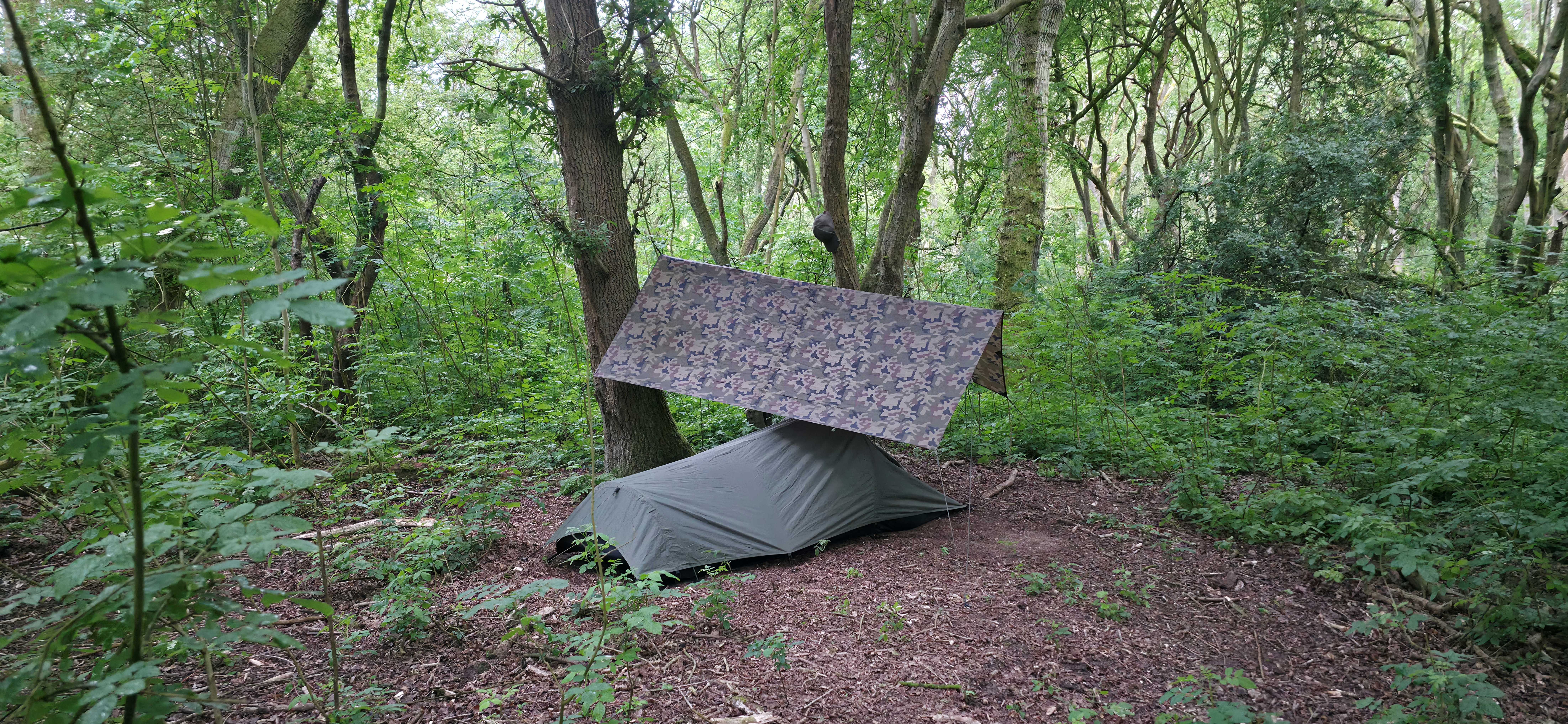
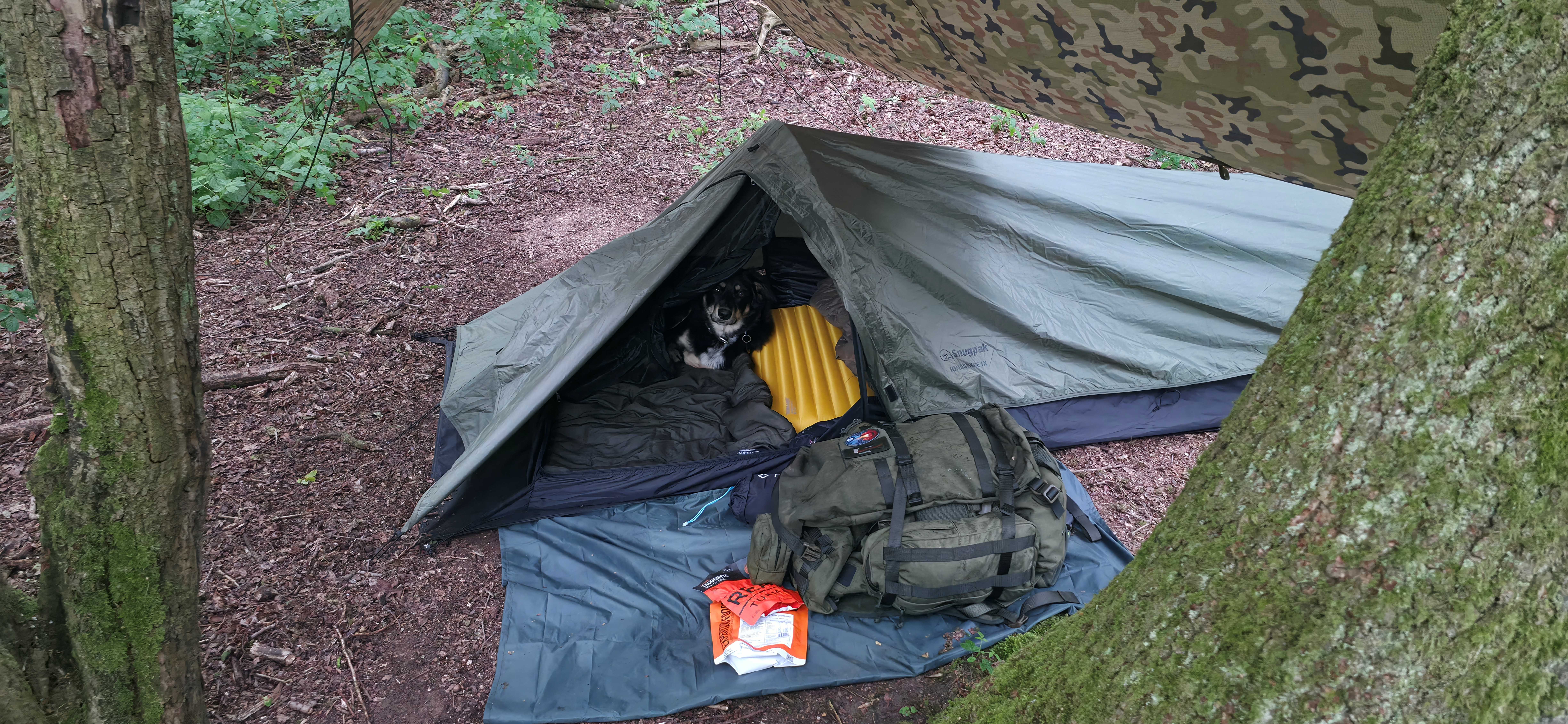
For this outing, I used the Snugpak Ionosphere. It offers excellent ventilation, making it ideal for the summer months. To complement the tent, I utilized the Helikon-Tex Supertarp Small in PL Woodland camo. This tarp is perfect for keeping pack size minimal, and it integrates well with the Ionosphere by providing an extra layer of protection for the entrance, which is otherwise fairly exposed to the elements.
Setting Up in the Downpour
On this particular trip, the rain started around 16:00. I didn't reach my campsite until 20:00, but luckily, the forest canopy was dense enough to protect me while setting up. Later in the evening, the rain intensified significantly, but I was completely comfortable and dry inside the tent with my dog, Toby.
Pack Configuration and Wet Gear Isolation
For this trek, I carried the Savotta Jääkäri M (30-litre pack), with a Savotta Hatka attached for an additional 12 litres of storage. I used this external space to house my tent and tarp. While I know it’s generally better for pack balance to keep heavier items closer to your back, I knew rain was likely and wanted to keep my wet gear separated from the interior of my pack. After cinching everything down, the weight distribution didn't make any noticeable difference to my centre of gravity.
Sleep System
My sleep system consisted of the Carinthia Tropen in Multicam paired with a Sea to Summit Comfort Blend Travel Liner, which provided more than enough warmth for this time of year.
Breaking Camp and the Long Miles Home
The rain finally stopped around 06:00 the following morning. I broke camp shortly after and was on the move by 08:30. To give you an idea of the distances, I had hiked roughly 17 miles to reach the site, and the return leg the next day was a massive 22-mile trek all the way home.
The Overgrown Field and Lessons Learned
The specific area of Wellow Park where I set up was difficult to access; the paths were heavily overgrown with brambles, and there was no sign of human foot traffic for a long time. I had positioned the camp near the edge of the woods.
Getting out of the woods was quick, but once I hit the open fields, the problems began. I was wearing waterproof boots, but my trousers were not waterproof. The grass in the field had grown to the point where it was reaching my hips—which, at 188cm tall, gives you an idea of just how long it was.
Because of the heavy rain the night before, moving through that tall grass was essentially like walking through open water. My trousers were instantly drenched. While that was manageable on its own, the real issue was that the water channeled directly down into the tops of my boots, completely filling them.
I stopped to empty the water out, only to walk another mile and find myself in yet another overgrown field, where the process repeated. The result was severely macerated, soft feet, which led to significant pain and blisters. The lesson learned here is simple: if I know I’m going to be walking through long grass after rain—or even just through heavy morning dew—I need to ensure I’m carrying gaiters or waterproof socks.
Click to show gear used on this trip
(Comfort Rating: 10 – 15 kg)